
Our current HDR students - contact details, thesis title and description
Gabriella Allegretto
Investigating Perceived Effects of Artificial Light and Light Pollution in Urban Green Spaces.

Barbara Alsop
An Analysis of the Effectiveness of River Restoration in the Mount Roland Catchment of North-Western Tasmania.
Bennie Mildren
Regional climate change guidance for local action: Reducing uncertainty in regional climate projections.
My project is focused on improving our understanding of extreme weather predictors in Tasmania and enhancing regional climate models. We aim to explore the factors influencing extreme weather, develop methods to identify such events and their synoptic conditions, assess current model performance, and seek ways to improve predictions. The research will leverage machine learning techniques to develop novel, scientifically rigorous, and interpretable methodologies for climate science applications. Our ultimate goal is to create and demonstrate new approaches to advance our ability to predict and understand extreme weather in Tasmania.


Anne Boothroyd
Marine Spatial Planning in Dynamic Environments
Marine Protected Areas (MPAs) are designated areas of the marine environment where human activities are limited or prohibited to conserve biodiversity, manage fisheries, and mitigate ocean threats. This project applies a Systematic Conservation Planning (SCP) approach to support MPA planning processes in the Southern Ocean. The approach incorporates conservation priorities and socio-economic objectives to identify priority areas for MPAs that aim to meet conservation targets and minimise conflicts with marine resource users. This research also considers the role of planning and governance frameworks within the geopolitical context of MPA development with the aim to support the continued development of a representative network of MPAs for the Southern Ocean.
Claire Burgess
Extractivism and new green economies
Claire Burgess is a PhD candidate with research interests in the political ecology, extractivism and new green economies. Claire has a background in critical development studies (Master of Development Studies and Master of Law from the University of Melbourne) and has Non-Government Organisation (NGO) field experience in Myanmar and the Northern Territory.
Her research examines the global corporate response to the climate emergency in the form of ‘clean' energy technologies and the emerging impacts of a 'green' mining boom on vulnerable frontline communities and biodiverse regions. More specifically, her research aims to shine a light on the various social technologies large-scale extractive industries employ to continue destructive practices whilst avoiding responsibility for addressing the root causes of the intertwined climate, ecological and inequality crises. She is interested in how these contradictions present challenges for the climate movement in delivering a just transition and the diverse alternatives to extractivism emerging from indigenous-led resistance movements as important but often hidden.

Alex Burton
Crisis, Collapse and Utopia: Geographical imaginaries of sustainability in Tasmania
The island of Tasmania is imagined through the lenses of Indigenous collapse, socioeconomic crises like the housing shortage, contestations over pristine environments and sustainable resources, narratives of a utopian escape from high-stress life, and escape from the societal disruptions of climate change. Crisis and collapse are grounded in a combination of social, material and existential precarity, catalysed by alienation in contemporary globalised systems and the experience of human-induced climate change. Nevertheless, crisis and collapse are not conceptualised uniformly. How issues are imagined stakes a claim to how these issues are understood, which can be resolved, what resolution looks like, and how pessimistic these prospects are. I propose to research how geographical imaginaries are involved with crisis and collapse, how these relate with geographical imaginaries, and how conceptions of sustainability and utopia are implicated in such relationships. These interests are situated within a more general interest in how sustainability, crisis, collapse and utopia are performed within different geographies.
Daniel Hackett
Investigating Theoretical and Policy Frameworks Behind the Mapping, Designation and Management of Wild Places and Soundscapes as Wilderness.
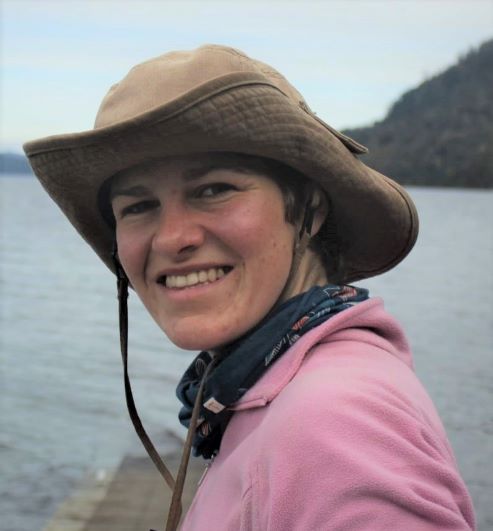

Ryan Haynes
Advancing Hyperspectral Imaging from a Drone for Ecosystem Monitoring
Ecosystem monitoring is important to understand how changes in the environment are affecting natural resources and biodiversity. With increased disturbance from human impact and increasing environmental extremes in the face of a changing climate, our natural ecosystems are undergoing drastic change. Remote sensing is a growing field of research offering the capability of monitoring ecosystem change non-destructively and at broader spatial scales than traditional field methods. The aim of this project is to advance ecosystem monitoring through the development of a modular, multi-scale airborne system and processing workflow for high-resolution imaging spectroscopy.
Connect with Ryan on Twitter and ResearchGate
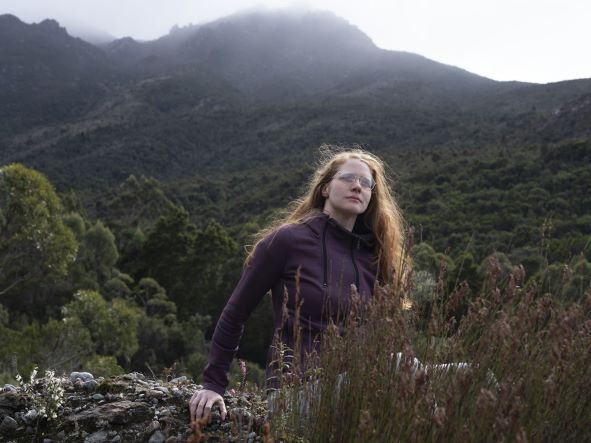
Megan Hinzman
Sovereignty at the Margins: Intersections in the Cultural Politics of Human and Environmental Flourishing
The purpose of this study is to examine the tensions that West Coast Tasmania communities face in being economically dependent on resource extraction but not necessarily having control over those resource extractive industries. The objective of this research project is to study and engage with West Coast communities to learn about the social, political, economic, and environmental complexities of these communities and what locals believe their community needs to be well and sustainable. This is in order to understand the underlying issues of power and control that shape life in the West Coast and local residents’ perceptions of these issues. Most importantly, the objective of this research is to learn what West Coast communities foresee for their futures and what direction they hope community development will take.
Thomas Hooper
How Australia could collapse: Anticipating risk with Future Scenario Planning
This study offers a pragmatic and utility focused approach to collapse studies designed to be implemented by a variety of actors for use in their local contexts. Its goal is to provide actionable theories and methods to assist societies in anticipating the potential dimensions of future significant risk.
It will advance collapse theory utilising a systematic literature review, followed by the incorporation of power analysis to improve theoretical depth. Then, novel methods of Future Scenario Planning will be developed using Structured Analytic Techniques to develop scenario’s of significant risk in Australia to improve strategic decision making.

Dimuthu Jayakody
What’s Place Got To Do With It?: The Role of ‘Place’ in Climate Adaptation in the East Coast of Tasmania
Place plays a fundamental part in our lives. The places we live, work and enjoy are saturated with history, culture, memories and traditions that make up the collective lived human experience; these places are, therefore, an important part of who we are as individuals and as a people, and our attachment to these places are significant to the decisions we make and the actions we take. Place attachment, which is broadly defined as the emotional bonds we form with place, is increasingly recognised for its affective influence on individual environmental behaviours, including autonomous climate change adaptations. It is important that we acknowledge this influence, particularly in the context of changing environments and climate change, when planning for and adapting to inevitable climate impacts. This research explores how place attachment shapes climate change adaptation. Using both qualitative and quantitative methodologies, this project aims to understand the nature of place attachment along the East Coast region of Tasmania, and how this attachment lends to individual climate change adaptation action. This work will not only contribute critical insight into the role of place attachment in climate adaptation but will also contribute to successful climate adaptation and communication pathways.

Malcolm Johnson
Changing Coastal scapes: mapping values, relations, and adaptive trajectories along the coasts of Southern Tasmania
Coastalscapes serve as the interface between landscape and seascape, humanscape and non-humanscape; assemblages of freshwater and marine flows, built environments and natural ecosystems. These places and their inhabitants are particularly vulnerable to dual impacts of increased coastal-use change and climate change, which is especially the case in Southern Tasmania. As communities continue to experience the ongoing changes to historical climatic baselines, they must develop adaptation strategies that reflect the values individuals assign to the coastalscape, the subjective climate change risk perspectives associated with various stakeholder groups, and the likelihood of a future demarcated by surprise. Informed by a more-than-relational theoretical framework, this project utilizes a mixed-methods approach to cross the qualitative and quantitative research divide to generate (i) coastalscape-oriented climate adaption decision system, (ii) set of socio-ecological discourses or Q-factors, and (iii) consultable integrated values, risks, & factors interface.
Connect with Malcolm on Linkedin, Twitter, and ResearchGate
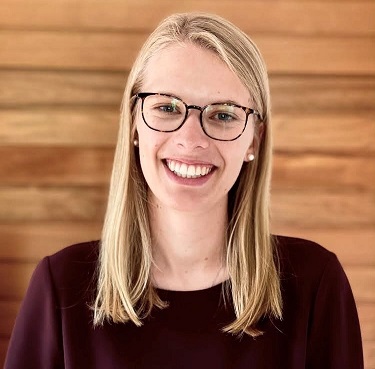
Charlotte Jones
Affecting the Future: Emotions in the Anthropocene
This project explores the role of emotions in shaping understandings of and responses to global environmental futures. Based in qualitative methodologies and building on recent geographical and sociological research on emotion and affect, the project challenges dominant representations of emotions as a primarily personal and private experience that lies outside the remit of the physical and social sciences. Rather, understanding feelings as a key constitutive aspect of social discourse and practice, this project seeks to understand how knowledge, emotion and action are co-produced in the context of growing awareness in the 21st century of the extent of human transformation of the biology and geology of the Earth. Encapsulated in the figure of the Anthropocene, this awareness is prompting new expressions of feeling about what comes next. This project will contribute important new insight into the role of emotions in co-constituting different futures.
Connect with Charlotte on Twitter, Google Scholar, Research Gate or LinkedIn

Haylee Kaplan
Community perceptions of biotic nativeness in public urban greenspaces
This project seeks to explore how people perceive and conceptualise biotic nativeness in the context of cities, where ‘nature’ is often novel, cultivated, and designed to be multi-functional. Within the terrain of urban greening, and particularly in the face of climate change and urban heat, there is heightened awareness that traditional conservation principles are inadequate for decision-making without fully incorporating people’s values and expectations. This project will answer questions such as, how do people perceive nativeness in urban landscapes? Why is having native or non-native trees in public urban greenspaces important to people? And what do native landscapes afford urban residents that non-native ones might not? This research will provide valuable new insights into the social dimensions of nativeness for urban greening practice and policy.
Connect with Haylee on Google Scholar and ResearchGate

Kasirat Kasfi
Deep learning for tree segmentation from 3D point clouds
Forests are the primary terrestrial ecosystem of the world, housing the majority of the population of plants. By providing and maintaining a healthy ecosphere for humans and animals, forests form an indispensable component of our habitat. Forests also provide humans with other useful resources, such as timber and crops, however unsustainable extraction of forest resources has a negative effect on the forest. For sustainable forest management, which addresses forest degradation deforestation, forest inventory collection is a critical tool. In this regard, lidar remote sensing technology has replaced the traditional way of collecting forest inventory. Lidar can obtain accurate 3D topographic features of forest areas along with structural features of trees in the form of 3D point clouds. To automatically collect the structural measurements and resource composition of forests from the 3D point clouds, this project investigates deep learning techniques to help segment out individual trees and various components of forests.
Miranda Kellett
Managing tourism in protected areas for socio-ecological justice
This research project seeks to investigate how well Tasmania’s protected area management and governance system provides justice to those affected by tourism and recreation and asks what changes we could make to governance and management to improve the delivery of justice to affected entities.
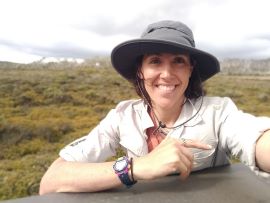
Laura Sotomayor
Improved Monitoring of Ecosystem Resilience using High-resolution Remote Sensing
Semi-arid terrestrial ecosystems are characterised by sparse vegetation, comprising herbaceous non-woody plants (e.g., forbs or grass) and woody plants (e.g., trees or shrubs). These ecosystems face challenges from global climate change, including shifts in rainfall, temperature variations, and elevated atmospheric carbon dioxide (CO2) levels. Effective monitoring is crucial for informed decision-making and sustainable natural resource management in the context of rapid environmental changes.
The research focuses on extracting information about these terrestrial ecosystems, particularly emphasising the mapping of Fractional Vegetation Cover (FVC). FVC, a key biophysical parameter for monitoring ecosystems, indicating their balance and resilience. Assessing FVC is pivotal for evaluating vegetation biomass and carbon stocks, essential components of ecosystem health. Precise mapping of FVC involves categorising three key cover types: photosynthetic vegetation (PV), non-photosynthetic vegetation (NPV), and bare earth (BE). FVC provides a quantitative measure of the relative contribution of each cover type to the total ground surface, aiding in characterising vegetation composition.
To perform efficient and accurate FVC measurements, remote sensing techniques are essential to complement conventional field-based methods. The research directly addresses the challenges associated with mapping terrestrial ecosystems. By leveraging advanced remote sensing technologies and employing state-of-the-art deep learning methods, the objective is to enhance understanding of ecosystem composition, structure, and function features. The research further aims to establish automated workflows for systematic ecosystem health assessments. This contribution is crucial for validating satellite observations and conducting subsequent change detection analyses. Moreover, the research endeavors to establish an advanced framework for environmental monitoring and management amidst rapid environmental changes.
Connect with Laura on Researchgate, Twitter and LinkedIn

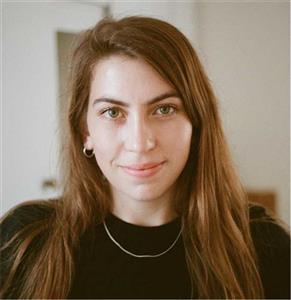
Gypsy Lehmann
Geographical Imaginaries of Belonging in the Anthropocene: A Practice-led Study of Tasmania
This investigation seeks to explore the role of creative practice in imagining multifarious lifeworlds and shaping adaptive, decolonial methods for living and belonging in the Anthropocene. Examining such phenomena as migration, disaster recovery and biodiversity loss as tied to human induced climate change, Gypsy seeks to contribute to emerging narratives on the embodied, conversational, and generative qualities of creativity towards an ever-evolving ethic of belonging to, with and within a world in crisis. Located at the intersection of possibility and actuality in both mental and material conceptualisations of place, geographical imaginaries provide the mechanism through which this exploration will unfold. The candidate intends that the principles and philosophies borne of this study of Tasmania, its stories and its people, will speak to the crises humans and more-than-humans face as global and interconnected entities.

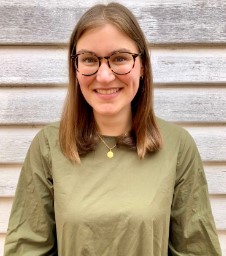
Grace Martini
Clothing and Textile Waste Recovery in Tasmania. A case study analysis of current frameworks, and opportunities to progress from the linear economy

Marisa McArthur
Data justice in Australian smart cities
Smart cities involve the use of the Internet of Things (IoT), big data, cloud computing, algorithmic governance, and related technologies to manage varied urban challenges. While smart cities show promise, they raise ethical challenges to do with surveillance, consent, inferencing, and datafication, among others. The data-influenced or data-driven harms that can result from these challenges can affect individual and collective agency, self-determination, freedoms, and sovereignty and, in turn, influence the life course. These harms are not evenly or equitably distributed across groups, and neither is knowledge about smart cities and the data collected by associated technologies. A governance approach informed by data justice shows promise for maximising potential benefits and minimising potential harms coming from smart cities. This PhD study focuses on Australian smart cities, capturing community and local government perspectives on data justice, investigating how data justice is integrated (or not) into local government smart cities policy, and generating policy recommendations for more just and inclusive smart cities.
Connect with Marisa on LinkedIn, Twitter, The Conversation, Google Scholar and ORCID

Michelle Morgan
A systems approach to support community health and wellbeing

Therese Murray
Geographies of Informal Place-based Human Networks of Care, Support, and Flourishing
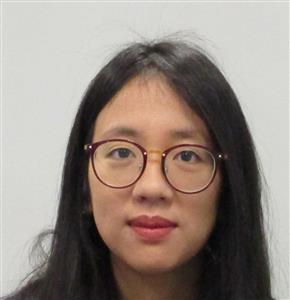
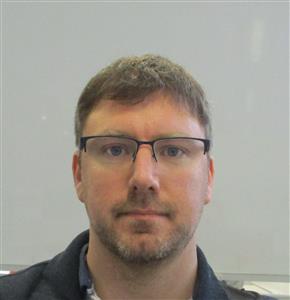
Andrew Orange
Using Smartphone/Tablet Technology to Improve Community Awareness Collaboration, Risk and Identify Shared Responsibility Opportunities for Bushfire Resilience.
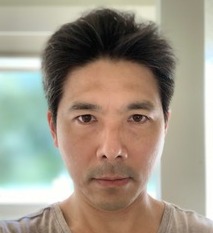
Mitsuhiro Ozaki
Impact of interaction between atmosphere and topography on fire propagation
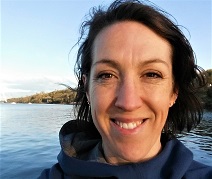
Karen Palmer
Morphed estuaries and distorted tides: modelling the dynamic effects of sea level rise


Nina Rogers
Exploring the municipal climate change response as a process of decision-making
Nina’s PhD research is exploring climate change governance and decision-making at the municipal level. Nina is interested in the factors that contribute to effective climate change risk planning in councils, how councils move from planning to implementation of identified climate-risk management responses, and whether a planning to implementation gap arises. In exploring these themes, Nina seeks to building understanding of both the decision-making process in councils and the decision-makers. This includes perceptions of climate risk held by local government executive and elected leaders; what motivates them to act on climate risk; and the surrounding socio-institutional conditions in a council that support the active management of climate risk over the immediate and longer term.
Nina commenced her PhD in December 2019 and is supervised by Professor Jason Byrne and Dr Vanessa Adams.

Glen Rutherford
How can economic and management systems better address current environmental crises?
In the current Anthropocene era, environmental crises such as climate change, biodiversity loss, and global pandemics (e.g., novel coronavirus) are particularly anthropogenic in nature. As complex (or even ‘wicked’) problems, it is proposed that these social-ecological crises need a relational modelling involving organizational structure, process, function, and contents, all occurring across micro, meso, and macro scales. It is claimed that since economic and management systems contribute to environmental crises (e.g., through over-consumption and carbon and other types of pollution), they should play a role in their resolution. It is argued that human (economic and management) systems may be construed through concepts of self-organization (self-control and self-support) and sociocultural organization (sociocultural control and sociocultural support). Control systems are considered to entail negative (dampening) feedbacks and support systems to entail positive (amplifying) feedbacks. Self-organization is also conceived to involve within system and within scale dynamics and sociocultural organization to involve between and among systems and between and among scale dynamics. To test the relational model, COVID-19 is to be utilised as a natural experiment. The research question may be: ‘how do geo-political and/or cultural factors affect economic and business (organization) management of the pandemic?’ The role of politics and culture in economic management effectiveness may be examined using employment (weekly payroll jobs) data in Australia and income in-equality (Gini co-efficient) data across the world. The role of politics and culture in health management effectiveness will be assessed using comparative mortality rates in jurisdictions in Australia and in jurisdictions around the world.
https://scholar.google.com.au/citations?hl=en&user=QtqS2i4AAAAJ
https://scholar.google.com.au/citations?user=QtqS2i4AAAAJ&hl=en
Connect with Glen on LinkedIn, ResearchGate and ORCID

Samuel Sauvage
An Analysis of Existing and Experimental Weather Based Ratings, Indicators and Metrics in Reference to Fire Potentiality and Behaviour in Australia

Lydia Schofield
Understanding the socio-political causes, contexts and consequences of the emergence of Indigenous Protected Areas in Australia

Emma Sheppard-Simms
Islands of the Living Dead: Exile, Memory and Transformation on the Indigenous Island Cemetery.
This research focuses on the spatial significance of indigenous cemetery islands as found within three landscape sites in Australia. It aims to document how the dynamic meanings associated with these indigenous cemetery islands are changing contemporary practices of landscape architectural design. Within this research, a cemetery island is defined by the following two characteristics:
A small island (< 200km2) that has been the site of institutional incarceration of indigenous people during the 19th and/or 20th centuries and,
Where an indigenous burial ground remains in the present day as a physical and culturally significant trace of the island’s former institutional use.
These investigations will be contextualised by the theoretical framework of spatial production described by Henri Lefebvre (1974, trans.1991), as well as the concept of liminality as first described by anthropologist Arnold Van Gennup (1909) and later expanded within the later writings of Victor Turner (1967).
Edith Shum
Species as Place Makers: Narrating the role of place in light of climate change and social mobility
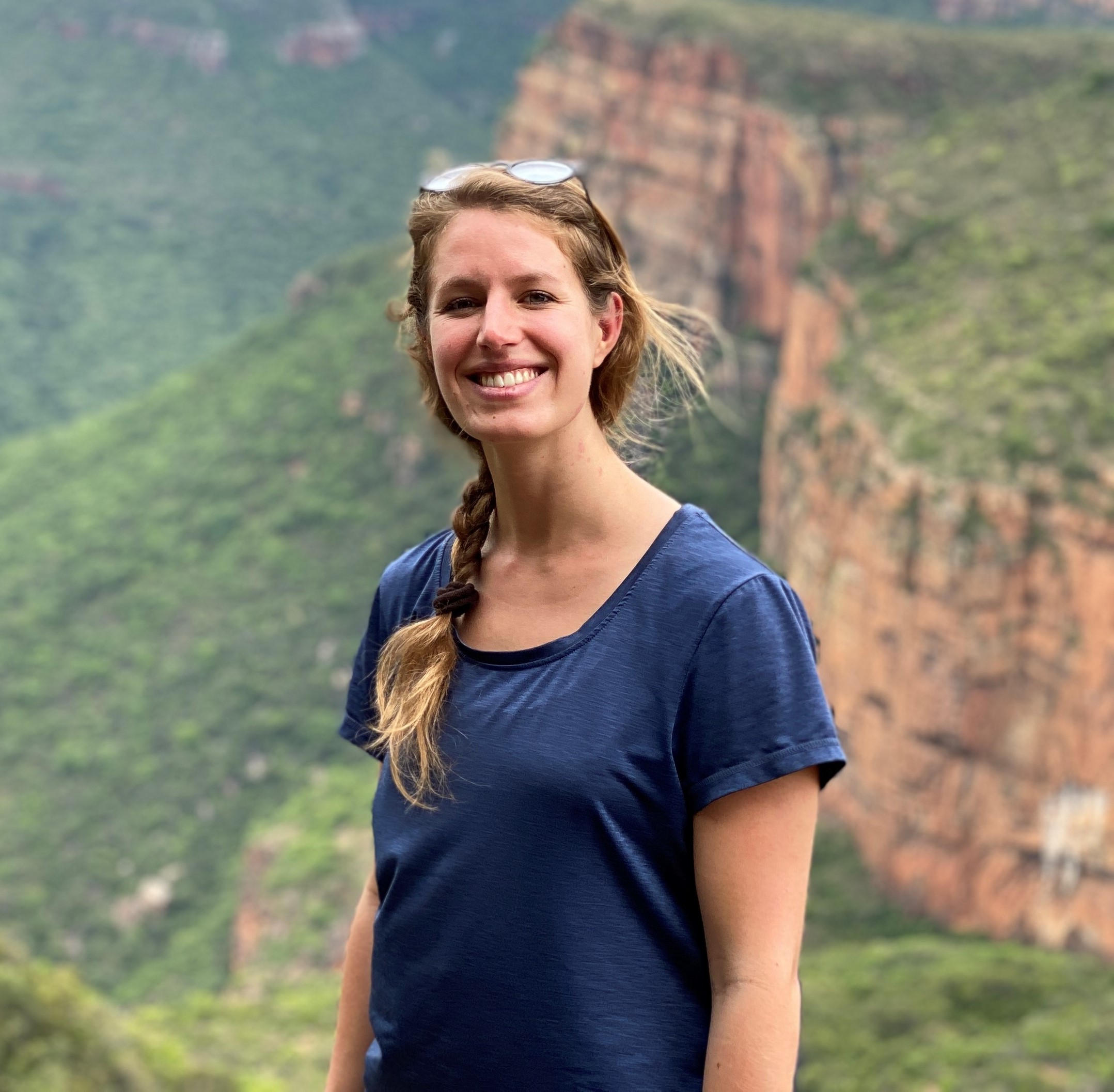
Natasha Stoudmann
Incorporating Human Dimensions into Wildlife Conservation Under Climate Change
The dual ecological and socioeconomic objectives of multiple-use protected areas (PAs) have made them an attractive tool in the conservation and political realms. They aim to address societal challenges as well as ensuring biodiversity conservation, by allowing a sustainable use of natural resources within their boundaries. However, quantitative assessments of their impacts are rare, and in particular studies in Africa are a major gap. This project aims to evaluate the existing knowledge-base regarding impacts of multiple use PAs at a global scale, and to assess their effectiveness in Madagascar - a country that has experienced a rapid expansion of its PA system in the past decades. Results will help identify evidence gaps regarding the effectiveness of multi-use PA, and inform practitioners and policymakers about one of the most widely implemented conservation interventions in recent years.
Connect with Natasha on ResearchGate and ORCID

Usitha Rajeevan
Nature Connection and Subjective Wellbeing: a mixed-methods approach to understand nature-determinants of subjective wellbeing.
Feeling a connection with nature has widespread positive health and wellbeing outcomes. People who score highly in nature connectedness also tend to score highly on measures of eudemonic wellbeing (personal growth, autonomy, purpose in life, environmental mastery, self-acceptance, positive relations to others and vitality), suggesting that they are flourishing and performing well psychologically, happier (positive affect) and are more satisfied with life. However, nature connection is adversely impacted by issues of access, engagement and exposure. Changing environments and human populations are leading to the distancing of people from nature, and altered people-species interactions. Nature engagement can even sometimes lead to disillusionment, despair and hopelessness..
Little is known about the nuances of how connecting with nature can impact on individual attitudes, behaviours and wellbeing and the structural changes that lead to maximising the wellbeing benefits.
This is a convergent mixed-methods study blending quantitative survey data with qualitative storytelling. The qualitative, place-based component will apply participatory research principles and creative storytelling methods and textual analysis techniques to improve our understandings of how people connect with nature, and the benefits to humans and environment. The quantitative component uses local and national surveys to understand variation in nature connection and wellbeing. Situated in the National Environmental Science Program (NESP) through the Sustainable Communities and Waste Hub, the project will involve working alongside NESP community partners, such as Landcare and Conservation Volunteers Australia.

Jacob Virtue
New Methodologies for Visual and Thermal Unmanned Aerial System (UAS) Assessments of Tasmanian Offshore Seabird and Mammal Populations

Benjamin Weeding
Urban Heat Mapping to Identify Current and Future Vulnerabilities and Adaptation Options
Mark Williams
Geoparks: Tools for successful geoconservation
Connect with Mark on LinkedIn, ResearchGate, and Google Plus
Abigail Wright
Clearing a Path for Participatory Branding to be Embraced in an Ethical Future
This project proposes using community gardens, which promote social and environmental sustainability, as a site to deconstruct the concept of brand(ing). The project will explore the concept of brand(ing) through, not only its history, but through its connection to both, ideas surrounding ‘sense of place’, and ‘assemblage of identities’, in the attempt to understand what role brand(ing) could play in engaging people with more environmentally and socially sustainable practices.

Deniz Yildiz
Exploring communication of bushfire risk in natural, social and cultural landscapes

Jingwei Zhang
Response of Southern Ocean Circulation and Sea Levels to Freshwater Input
