

Project details
Status: Current
At a glance
- The pyrethrum daisy (Tanacetum cinearifolium) is field grown commercially in Tasmania and Victoria for natural insecticide ingredients called pyrethrins.
- Winter dieback syndrome (WDS) is an emerging concern for the pyrethrum industry during its lengthy 15-month establishment phase.
- This research will investigate which factors contribute to winter dieback disease and develop strategies to reduce their impact on productivity.
About the project
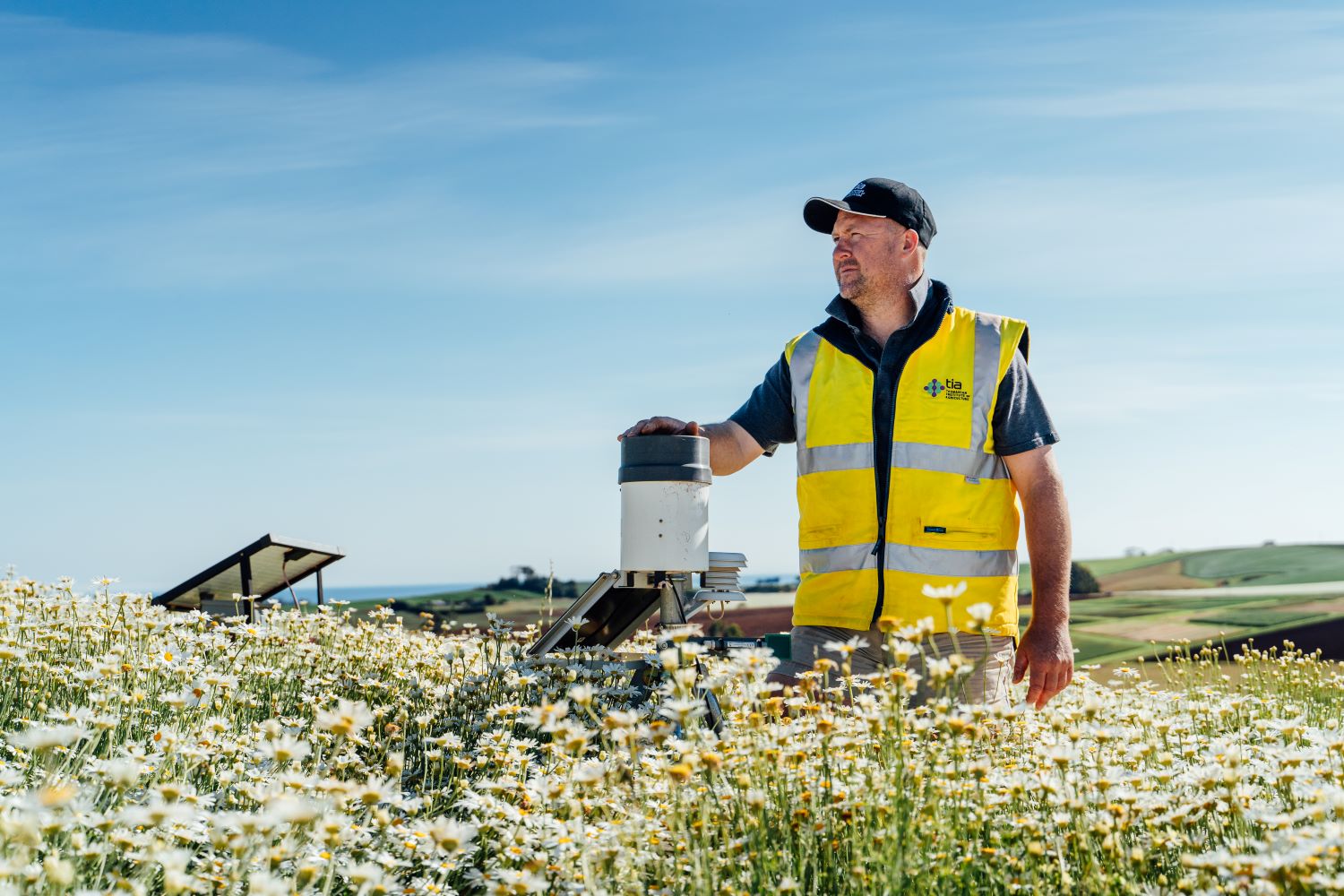
Pyrethrum (Tanacetum cinerariifolium) is grown for the production of pyrethrin compounds which are used in insecticidal products. In Australia, pyrethrum is grown across northern Tasmania and Ballarat in Victoria under contract to Botanical Resources Australia, the sole commercial processor.
Winter dieback syndrome (WDS) is an emerging concern for the pyrethrum industry that leads to plant deaths over winter. At present, no single cause has been attributed to WDS. Anecdotal observations suggest that WDS is caused by multiple stresses experienced by the crop during its relatively long establishment phase. These include weed competition, pests, disease and abiotic stresses such as agrochemicals, wind, adverse temperatures, frosts, waterlogging and drought.
The research
This project will determine the key factors contributing to WDS and the impact of WDS on pyrethrum production. The research will include both field surveys and controlled experiments exposing plants to abiotic and biotic stresses. Key questions posed by the research include:
- What are the underlying causes of WDS? Abiotic stress, biotic stress or both?
- Can stressed plants be detected and the level of physiological stress be measured through rapid estimates of photosynthetic variability?
- Does abiotic stress increase pyrethrum susceptibility to disease? Or vice-versa?
- What is the impact of winter dieback on pyrethrum productivity?
Industry outcomes
This project will provide the following outcomes for industry:
- Protocols for minimising the impacts of abiotic stresses on commercial production.
- Strategies for managing WDS incorporated into commercial operations.
- Reduced impact of WDS on cropping yields.
- Increased grower confidence in the industry.
Related stories
For more information contact:
Dr Jason Scott | Jason.scott@utas.edu.au
Acknowledgements:
‘Sustainably growing horticulture value in cool climate Australia’ (AS20004) is funded through Frontiers developed by Hort Innovation, with coinvestment from the Tasmanian Institute of Agriculture, University of Tasmania, Simplot, Premium Fresh, Bejo, Potatoes New Zealand, The Scottish Society of Plant Research, Botanical Resources Australia, South Pacific Seeds and contributions from the Australian Government and contributions from the Australian Government.