

Project details
Status: Current
At a glance
- Fava beans, also known as faba beans, are considered a sustainable high-protein food source with potential to fit well into a cool climate annual crop rotation.
- This research will investigate how environmental conditions and plant genetics influence protein synthesis in fava beans.
- Plant breeders can use this knowledge to develop new environment specific, high-protein fava bean cultivars for industry.
About the project
Plant protein is in demand locally as an alternative to animal protein, and globally to feed a growing population. Fava beans, also known as faba beans, are among the oldest cultivated crops and are considered a sustainable high-protein food source. In addition to its nutritional benefits, fava beans have numerous agronomic benefits that would be a good fit in a cool climate annual crop rotation.
Fava bean protein content ranges from 20% to 40% (dry weight). Increasing the protein content of fava beans could increase its consumption and value as an alternative crop for cool climate horticultural regions.
This research will investigate factors that influence the protein content of Fava beans and unveil the underlying molecular mechanisms by answering the following:
- How do different environmental conditions affect the protein content of Fava bean cultivars?
- How does hormone application impact protein synthesis and storage of in Fava beans?
- Under optimal conditions, which genes and proteins are involved in enhanced protein synthesis and storage?
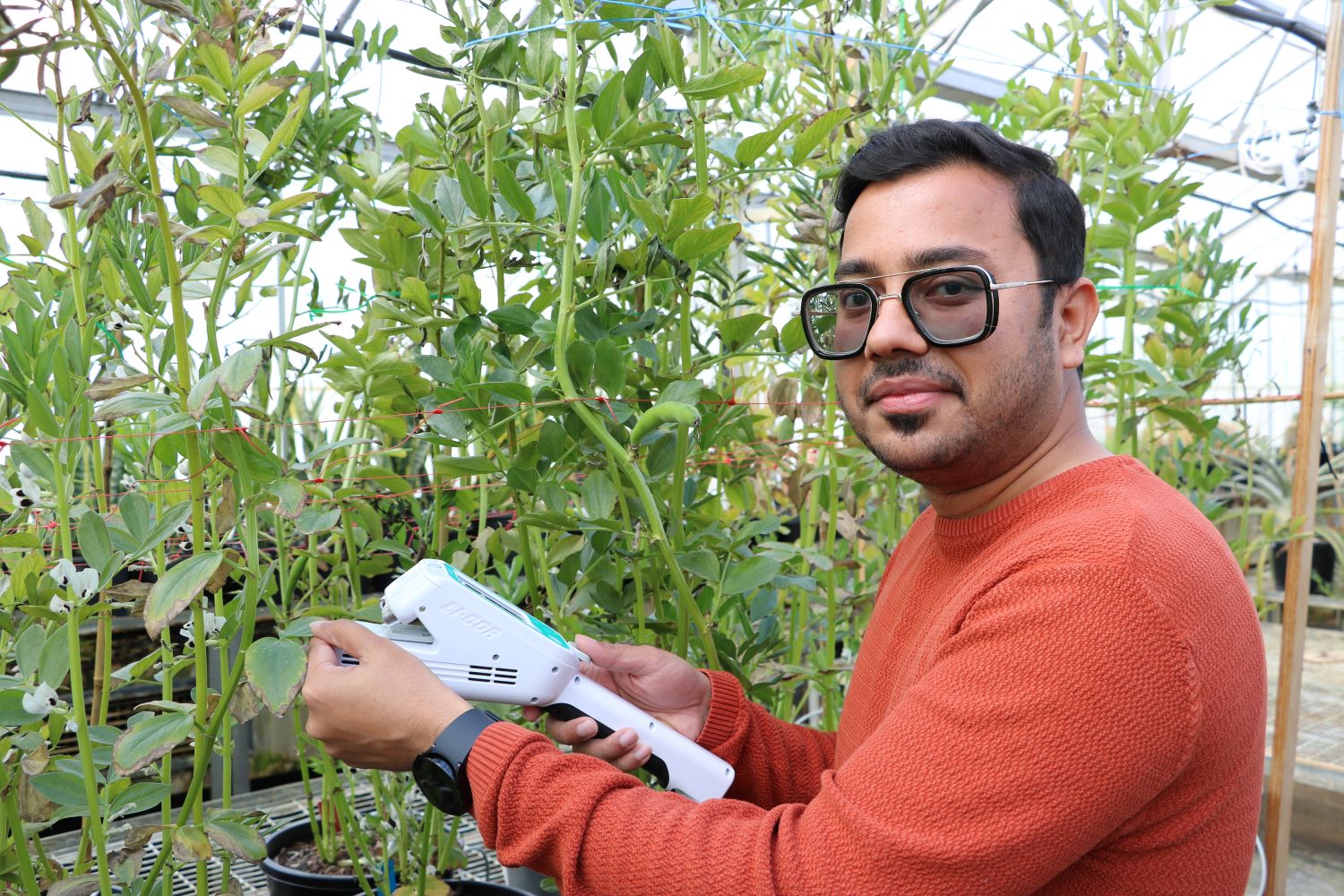
Industry outcomes
This research has the potential to underpin a high-protein Fava bean industry in cool climate regions of Australia and can serve as a reference to apply to related legume crops.
The key research outcomes will be:
- Better understanding of the key factors that lead to increased protein content in Fava beans.
- New understanding of the molecular pathways involved in protein synthesis to improve our understanding of gene and protein functioning. This will help to suggest future genetic targets for improved varieties and ensure a high-quality nutritional profile.
- Provide valuable information to the plant breeding industry, aiding in the development of high-protein commercial fava bean cultivars.
Related stories
For more information contact:
Dr Nathan Tivendale | nathan.tivendale@utas.edu.au
Fahad Khan| fahad.khan@utas.edu.au | PhD candidate
Acknowledgements:
‘Sustainably growing horticulture value in cool climate Australia’ (AS20004) is funded through Frontiers developed by Hort Innovation, with coinvestment from the Tasmanian Institute of Agriculture, University of Tasmania, Simplot, Premium Fresh, Bejo, Potatoes New Zealand, The Scottish Society of Plant Research, Botanical Resources Australia, South Pacific Seeds and contributions from the Australian Government and contributions from the Australian Government.