

Project details
Status: Current
At a glance
- Potatoes are susceptible to multiple soil borne diseases which can occur together and interact. This can complicate disease management and lead to poor potato tuber quality and yield.
- This research will investigate how different soil borne potato pathogens interact in the soil, the mechanisms they use and their impact on infection and disease development. The project will look at the positive and negative effects of soil borne potato pathogen interactions and newly emerging biological soil amendments.
About the project
Multiple potato soilborne diseases can occur together. Little is known about how they interact and affect potato health. In some cases, potatoes can become more susceptible to serious disease due to the actions of a less damaging disease. One pathogen may create a weakness or entry point in the potato tuber or root for another pathogen to exploit. Alternatively, a pathogen may inhibit or disrupt the development of other pathogens. An example of this is the potato early blight pathogen Alernaria solani, which is reported to directly inhibit and disrupt the Late Blight pathogen Phytophthora infestans (Brouwer et al., 2023). Understanding these interactions will guide new potato disease management strategies to improve the yield of quality potatoes.
The research will increase our understanding of how potato soil borne pathogens interact by:
- Investigating how economically relevant soil borne potato pathogens interact and the mechanisms they use.
- Observing how the potato responds to different combinations of key pathogens and how this affects infection and disease development.
- Investigating how potato soilborne pathogens interact with selected biological soil amendments.
The potato pathogens selected for this study include Verticillium dahlia - Verticillium Wilt, Spongospora subterranea - Powdery scab, Streptomyces scabies - Common Scab, Colletotrichum coccodes - Black Dot, Phytophthora erythroseptica - pink rot and Meloidogyne spp.- Root-Knot disease.
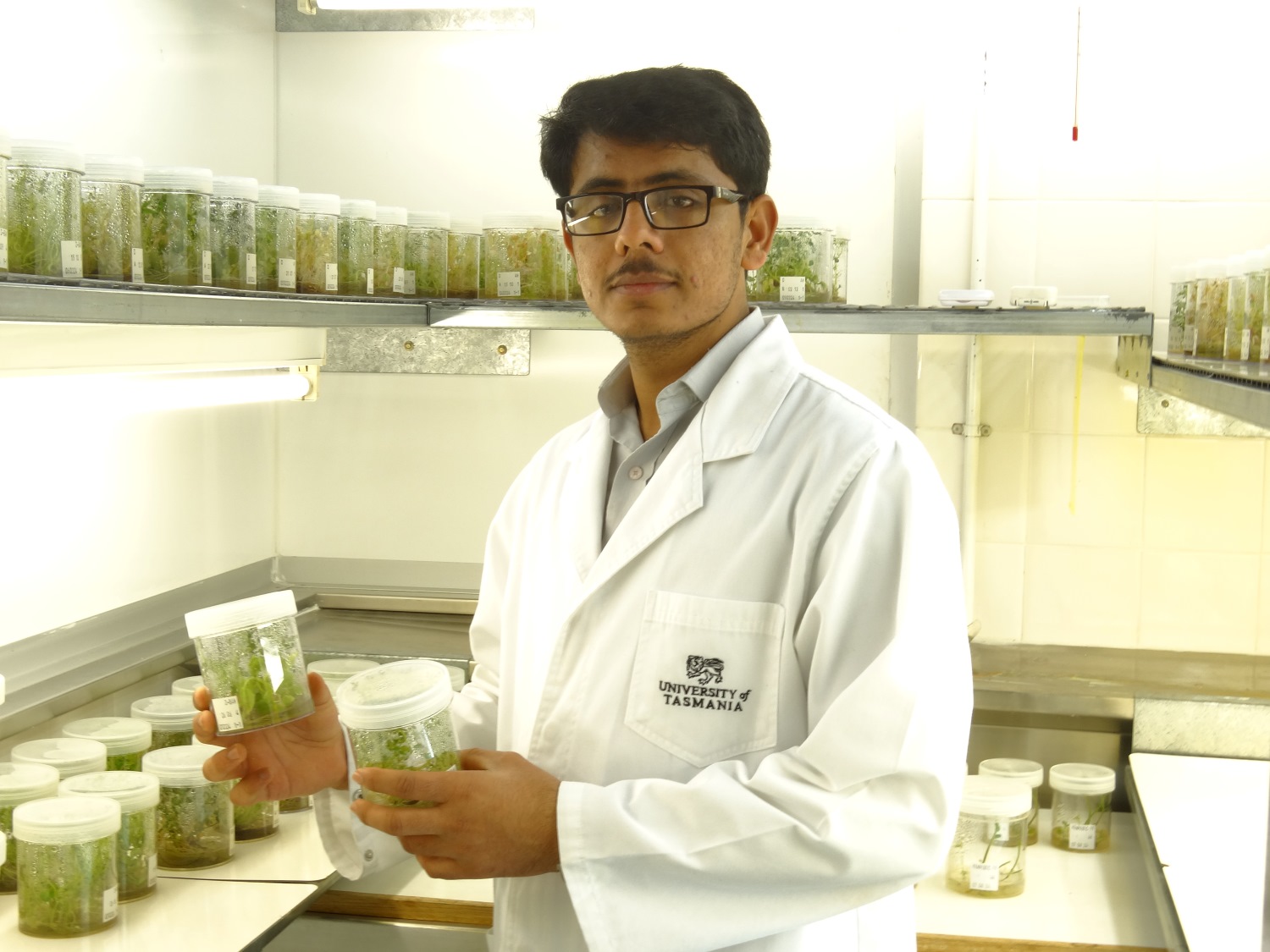
Key Outcomes
This research will lead to the following outcomes for the potato industry:
- Better disease management strategies for soil borne potato pathogens based on an understanding of the interaction between pathogens and the impact of their interactions on potato susceptibility.
- Improved potato tuber quality and increased production of marketable and export quality potatoes for improved profitability
Related stories
For more information contact:
Acknowledgements:
Sustainably growing horticulture value in cool climate Australia’ (AS20004) is funded through Frontiers developed by Hort Innovation, with coinvestment from the Tasmanian Institute of Agriculture, University of Tasmania, Simplot, Premium Fresh, Bejo, Potatoes New Zealand, The Scottish Society of Plant Research and contributions from the Australian Government and contributions from the Australian Government.