

Project details
Status: Current
At a glance
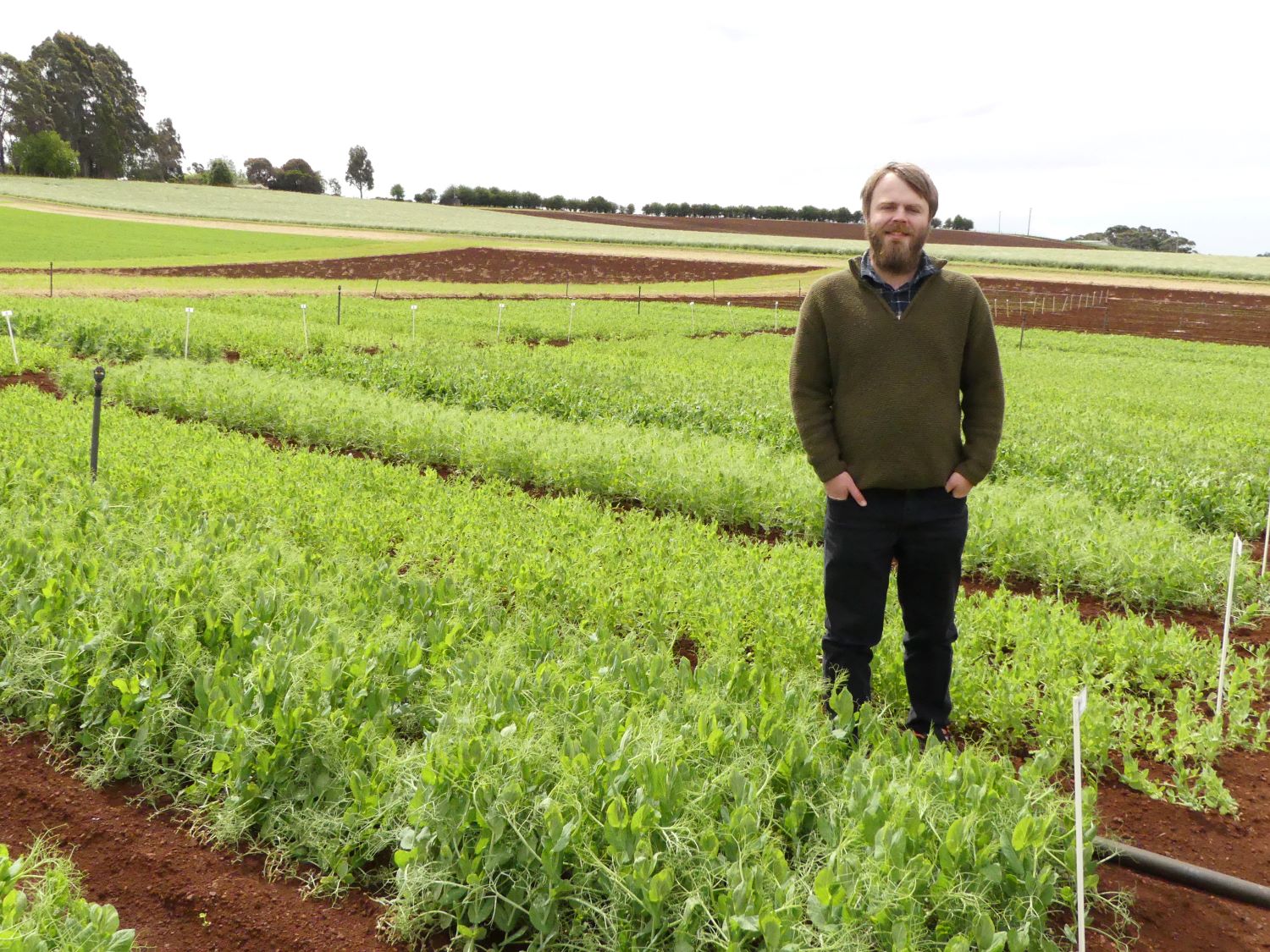
- Tasmania producers grow around 95 per cent of the total production of green peas for processing in Australia. Recent severe outbreaks of Ascochyta foliar blight ‘blackspot’ threaten the commercial viability of this crop in wet growing regions.
- This research aims to understand factors contributing to collar rot caused by Ascochyta or Fusarium and how these predispose pea plants to Ascochyta foliar blight. This knowledge will help researchers develop strategies to prevent and manage disease.
About the project
Severe outbreaks of Ascochyta foliar blight in the major pea production region of far NW Tasmania threatens the commercial viability of this crop. Peas can develop Ascochyta foliar blight via direct infection from previous crop debris or it can progress from Ascochyta collar rot, a common pea disease caused by a complex of fungi.
This investigation will look at how the host (pea cultivar), fungal pathogens and the environment contribute to the development of Ascochyta blight in peas.
Environmental factors contributing to Ascochyta collar rot and foliar blight
The research will compare how disease progresses in pea crops grown in different environments, far NW Tasmania and Midlands, to reveal the key environmental factors that contribute to Ascochyta collar rot and foliar blight. Environmental factors of interest include climate, soil type, pests such as bulb mites, previous cropping history and disease load in the soil. Following disease progression at multiple sites will increase our understanding of how collar rot infection predisposes pea plants to foliar blight.
Key pathogens & cultivar susceptibility
The research will identify the key fungal pathogens responsible for Ascochyta blight and the sensitivity of selected commercial pea cultivars. We will isolate and identify fungi from infected pea plants and test these on healthy peas to determine the key disease-causing species. The fungi will be DNA sequenced and tested on selected commercial pea varieties for pathogenicity. Identifying the causal pathogens will help tailor fungicide programs for pea crops and allow screening of new commercial cultivars.
Key outcomes
This research aims to provide following outcomes for the pea industry:
- Pinpoint when, where and how disease is occurring in crops so that management and control measures can be targeted according to the right timings and use the right active ingredients.
- Evaluate a bioassay method for Tasmanian growers as a tool to monitor for soilborne pathogens responsible for collar rot and predict crop outcomes.
- Develop a pathogenicity testing procedure for screening new varieties of peas against a suite of pathogens representative of the Tasmanian population.
- Evaluate various seed treatment methods as possible means of control.
Related stories
For more information contact:
Prof Alistair Gracie | alistair.gracie@utas.edu.au
Peter Targett| PhD candidate | peter.targett@utas.edu.au
Acknowledgements:
‘Sustainably growing horticulture value in cool climate Australia’ (AS20004) is funded through Frontiers developed by Hort Innovation, with coinvestment from the Tasmanian Institute of Agriculture, University of Tasmania, Simplot, Premium Fresh, Bejo, Potatoes New Zealand, The Scottish Society of Plant Research, Botanical Resources Australia, South Pacific Seeds and contributions from the Australian Government and contributions from the Australian Government.