

Project details
Status: Current
At a glance
- This research project will investigate new approaches to break the blueberry rust disease cycle, so that disease is easier to manage.
- Temperature limits for survival of the rust pathogen will be determined and modelled so that risk can be determined.
- Defoliation is a potential tool to break the disease cycle in evergreen and semi-deciduous varieties and this research will explore if it is feasible.
About the project
Blueberry rust is a fungal disease that entered Tasmania in recent years. Following substantial biosecurity and industry attempts to contain the disease, it continued to spread and was declared endemic and deregulated in 2022.
It is not well-known how the disease survives, spreads and infects plants in colder regions such as Tasmania, where a mix of evergreen and deciduous blueberry varieties are grown. This project will determine the limits of blueberry rust survival in Tasmania to help industry reduce its spread and assist management decisions.

Defoliation
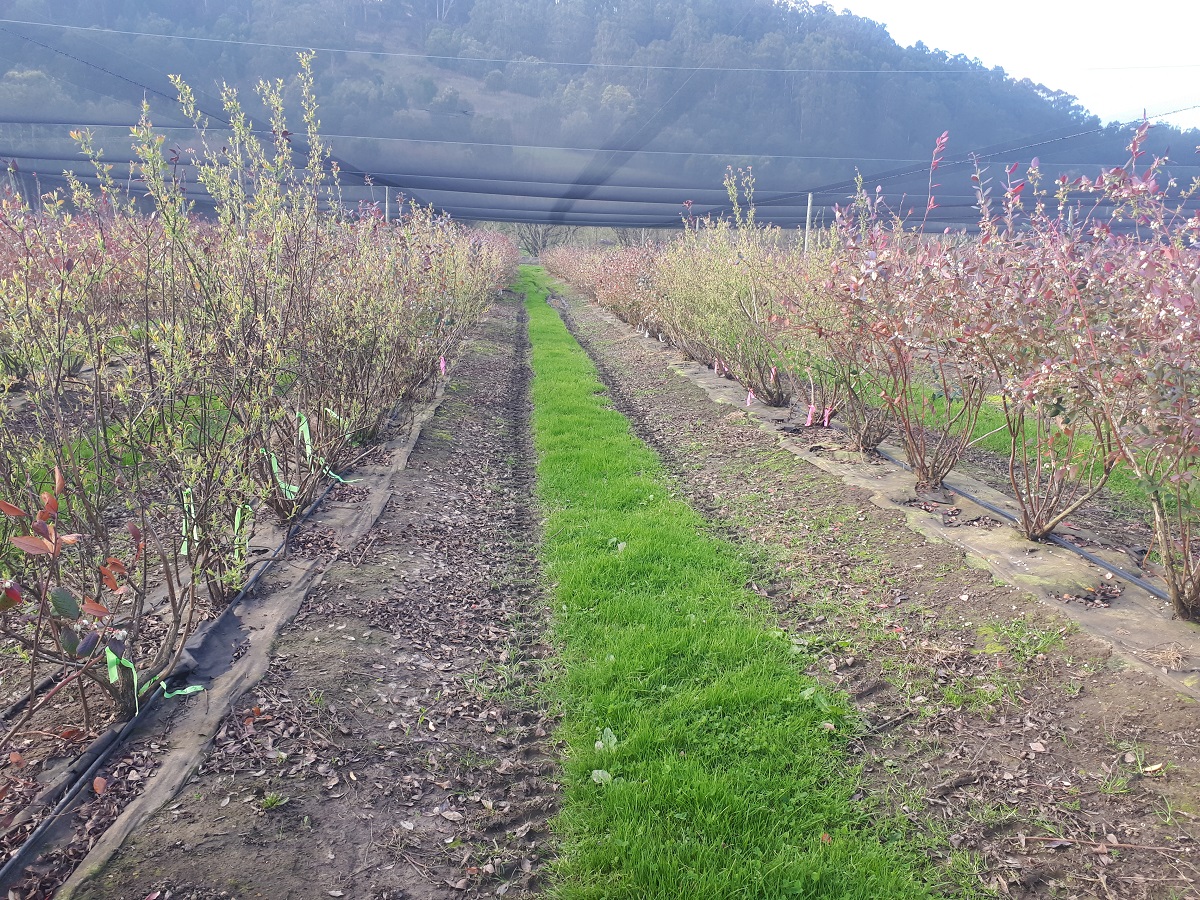
Breaking the disease cycle can be difficult in blueberry varieties that are not fully deciduous. The overwintering leaves have potential to harbour the rust fungus and carry this from one season to the next. This project will explore the use of defoliation (leaf removal) to potentially break the disease cycle. We will explore the best ways to conduct defoliation and measure the impact on future crop yield and quality.
The project will provide the blueberry industry with practical information and precision tools to contain blueberry rust.
Related resources
Related stories
For more information contact:
kara.barry@utas.edu.au