

Project details
Status: Current
At a glance
- Gibberellic acid (GA3) is applied to cool climate sweet cherries to achieve large firm fruit for premium export markets.
- Cherry growers are uncertain about optimum GA3 application frequency and rates and needed to achieve premium fruit quality with a particular focus on fruit firmness.
- The research will investigate how GA3 impacts cherry fruit quality and establish optimum GA3 application strategies for cherries grown under protective rain covers and conventional production systems.
About the project
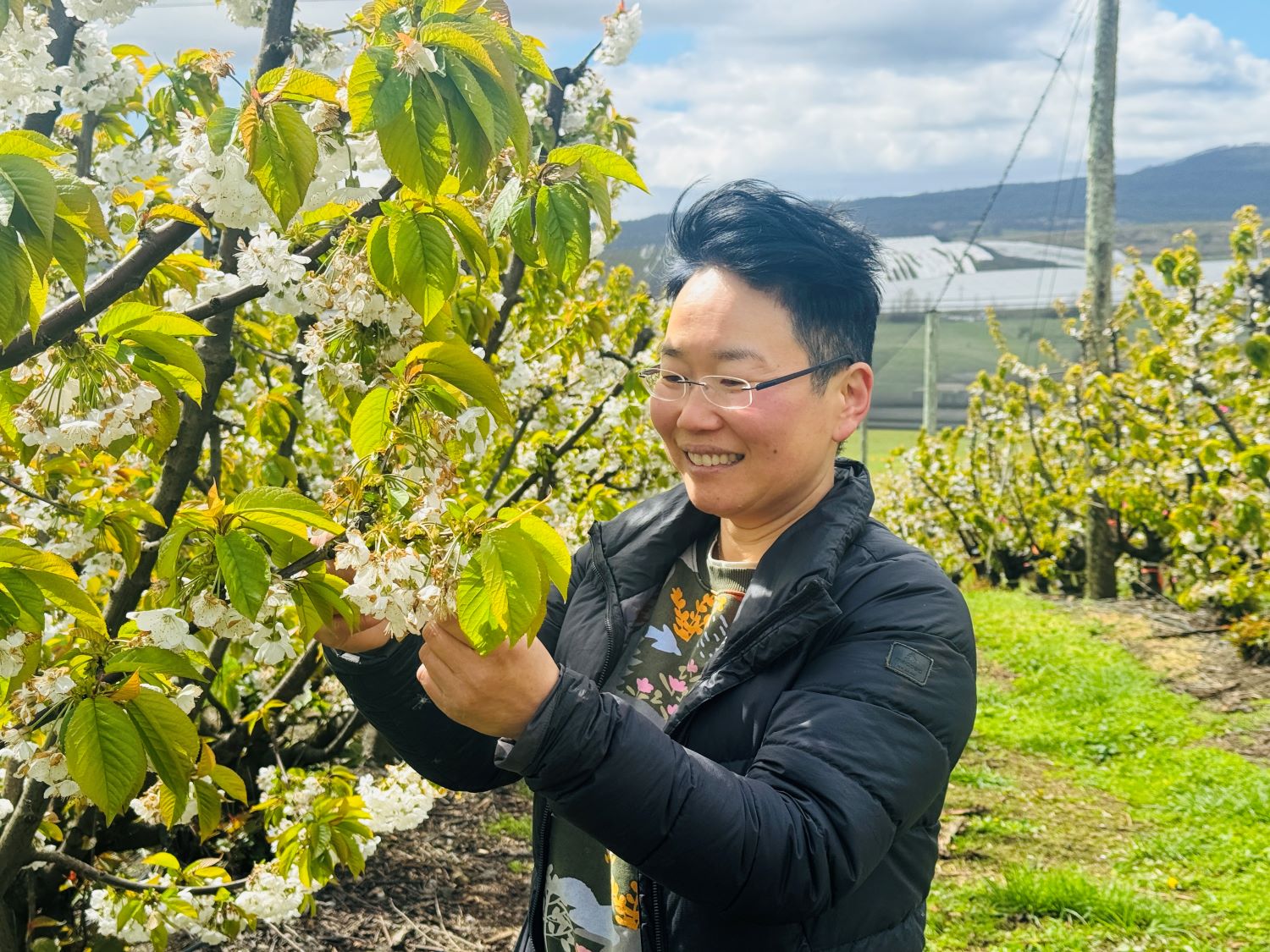
Tasmanian cherries are globally renowned for their crunch, texture, and taste. Firmer and larger fruit grown under rain covered systems are key targets for the cherry industry, particularly for an export market. The application of Gibberellic acid (GA3) is one method to achieve these outcomes yet the mechanism of how GA3 application functions within fruit at the cellular level is not fully understood. There is uncertainty among cherry growers about the best system of GA3 application, such as frequency and rate of application. Other factors which may impact GA3 efficacy include cultivar, crop load levels and weather conditions.
The research will determine optimum GA3 application systems for cherries grown under protective rain covers and conventional systems by answering the following questions:
- Mechanism of GA3: How does GA3 improve fruit firmness? e.g. does GA3 causes changes in endogenous hormones and cell wall content of sweet cherry fruit?
- Optimum rates: What is the optimum rate of GA3 application for protected and conventional production systems?
- Higher rates of GA3: Is fruit firmness and size improved with higher rates of GA application? What are the risks of using high rates of GA3? Do higher rates increase susceptibility to cracking and excess vegetative growth (current season); and/or reduce return bud number or bud set (following season)?
Industry outcomes
This research will provide following outcomes for the cherry industry
- Improved mechanistic understanding how GA3 improves firmness
- Cherry growers have protocols for optimizing GA3 application to reliably achieve premium quality fruit for export.
- Tasmania retains its reputation as a producer of premium quality sweet cherries.
Related stories
For more information contact:
Dr Alieta Eyles | alieta.eyles@utas.edu.au
Acknowledgements:
Sustainably growing horticulture value in cool climate Australia’ (AS20004) is funded through Frontiers developed by Hort Innovation, with coinvestment from the Tasmanian Institute of Agriculture, University of Tasmania, Simplot, Premium Fresh, Bejo, Potatoes New Zealand, The Scottish Society of Plant Research and contributions from the Australian Government and contributions from the Australian Government.