

Project details
Status: Current
At a glance
- Potato growth and development is largely controlled by chemical signals or phytohormones produced by both the potato and soil bacteria.
- This project investigates how different crop management regimes affect the phytohormones that impact plant growth and development.
- Understanding the relationship between potato management practices and phytohormones can lead to new treatments for improving plant growth, development and yield.
About the project
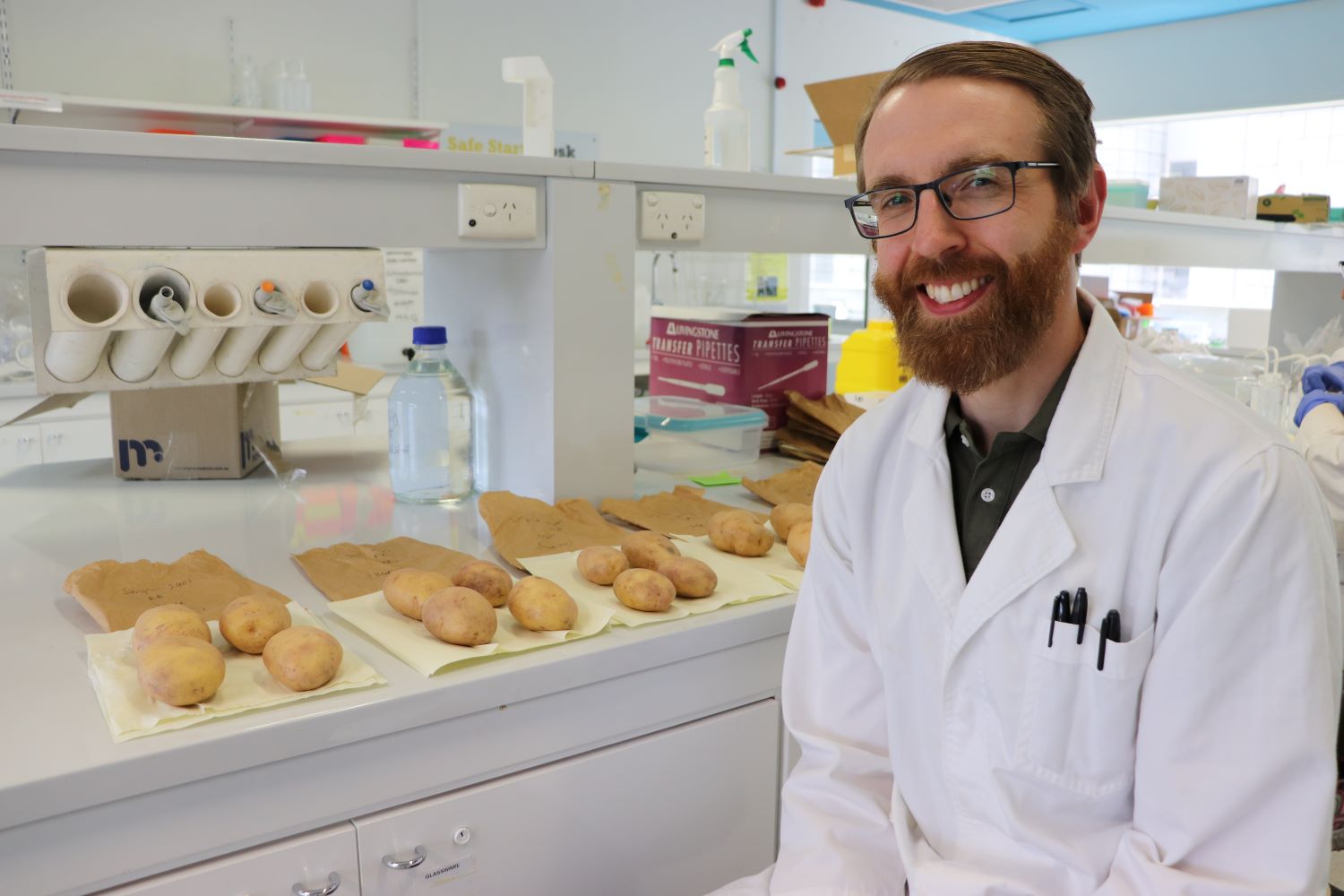
Potato (Solanum tuberosum) is one of the most important agricultural crops worldwide. Potato growth is controlled to a large degree by phytohormones produced by both the plant and supplied to the plant by phytohormone-producing bacteria in the soil. Potatoes grown in Tasmania are grown under a variety of chemical treatment regimes to control fungal pathogens. However, there are three knowledge gaps about potato phytohormones, potato growth and development and how they are affected by chemical treatments. This research aims to answer the following questions:
- What are the levels of the major plant hormones (auxin, cytokinin, gibberellin, ABA) in potatoes during different developmental growth stages?
- How do current chemical treatments affect phytohormones and the relative activity of various biochemical pathways in the potato plants?
- Do chemical treatments impact biochemical pathways in the soil microbiome?
This information will be correlated with physiological plant measures such as plant height, leaf number and area, stolon number and tuber size and number. This will guide how phytohormone application or a modified chemical treatment strategy can be used to improve plant growth and yield. The research will shed light on which genes have a role in modifying the plant or microbiome phytohormone profile.
Key outcomes
This research will provide following knowledge for the potato industry:
- Which phytohormones are important at which potato growth stages.
- How different management regimes affect phytohormones in the plant and the activity of the microbiome.
- The mechanisms by which different management regimes affect plant growth.
- Potential treatments or gene targets for altering the phytohormone profile of the potato plant and/or soil bacteria to positively affect potato growth, development and yield.
Related stories
For more information contact:
Dr Nathan Tivendale | Nathan.tivendale@utas.edu.au
Acknowledgements:
‘Sustainably growing horticulture value in cool climate Australia’ (AS20004) is funded through Frontiers developed by Hort Innovation, with coinvestment from the Tasmanian Institute of Agriculture, University of Tasmania, Simplot, Premium Fresh, Bejo, Potatoes New Zealand, The Scottish Society of Plant Research, Botanical Resources Australia, South Pacific Seeds and contributions from the Australian Government and contributions from the Australian Government.