

Image credit: Jeffrey Wright
As marine ecosystems face increasing challenges, protecting, repairing, and regenerating these vital environments is essential for enhancing biodiversity and maintaining crucial ecosystem services. In the Centre for Ecology and Biodiversity, we lead pioneering research to guide decisions that balance conservation efforts with the sustainable use of marine resources. Our goal is to ensure the long-term health of ecosystems and the continued provision of their benefits.
We are dedicated to providing accurate, relevant, and reliable information about marine ecosystems. By monitoring these environments, we support effective management practices, promote sustainable resource use, and strive to improve biodiversity outcomes. Our solution-focused approach emphasises regenerative actions, including ecosystem restoration and the recovery of threatened marine species.
Utilising advanced observational techniques, modelling, cutting-edge ocean technology, and geospatial information systems, our research drives meaningful progress and positive change for marine ecosystems.

Accessible, relevant, reliable, accurate, and timely information is critical to support the management of marine ecosystems and resources.
In the Centre for Ecology and Biodiversity, we provide research infrastructure to share knowledge on marine ecosystems and uses by developing advanced geospatial tools. Visit Seamap Australia and the Tasmania’s Marine Atlas to learn more.
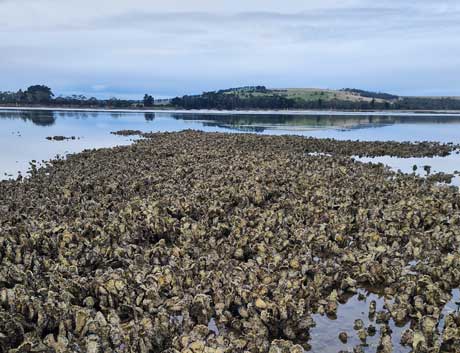
Marine ecosystem restoration helps regenerate lost or degraded ecosystems, and the marine diversity they hold.
In the Centre for Ecology and Biodiversity, our research on the restoration of kelp, seagrass and native oyster reefs provides the science behind restoration techniques, monitors outcomes, and supports ambitious plans for marine ecosystem restoration.
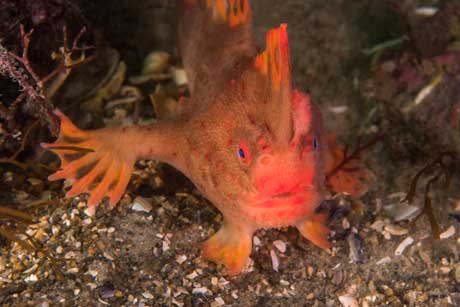
Because of anthropogenic factors, some marine species are now threatened, endangered or critically endangered. In many cases, action is urgently needed for conservation.
In the Centre for Ecology and Biodiversity, our research focuses on understanding the drivers of population decline in these species, monitoring their status, and supporting action for remediation and recovery.
Key species of interest lie close to home in Tasmanian waters, including handfishes, giant kelp, and threatened sea stars.
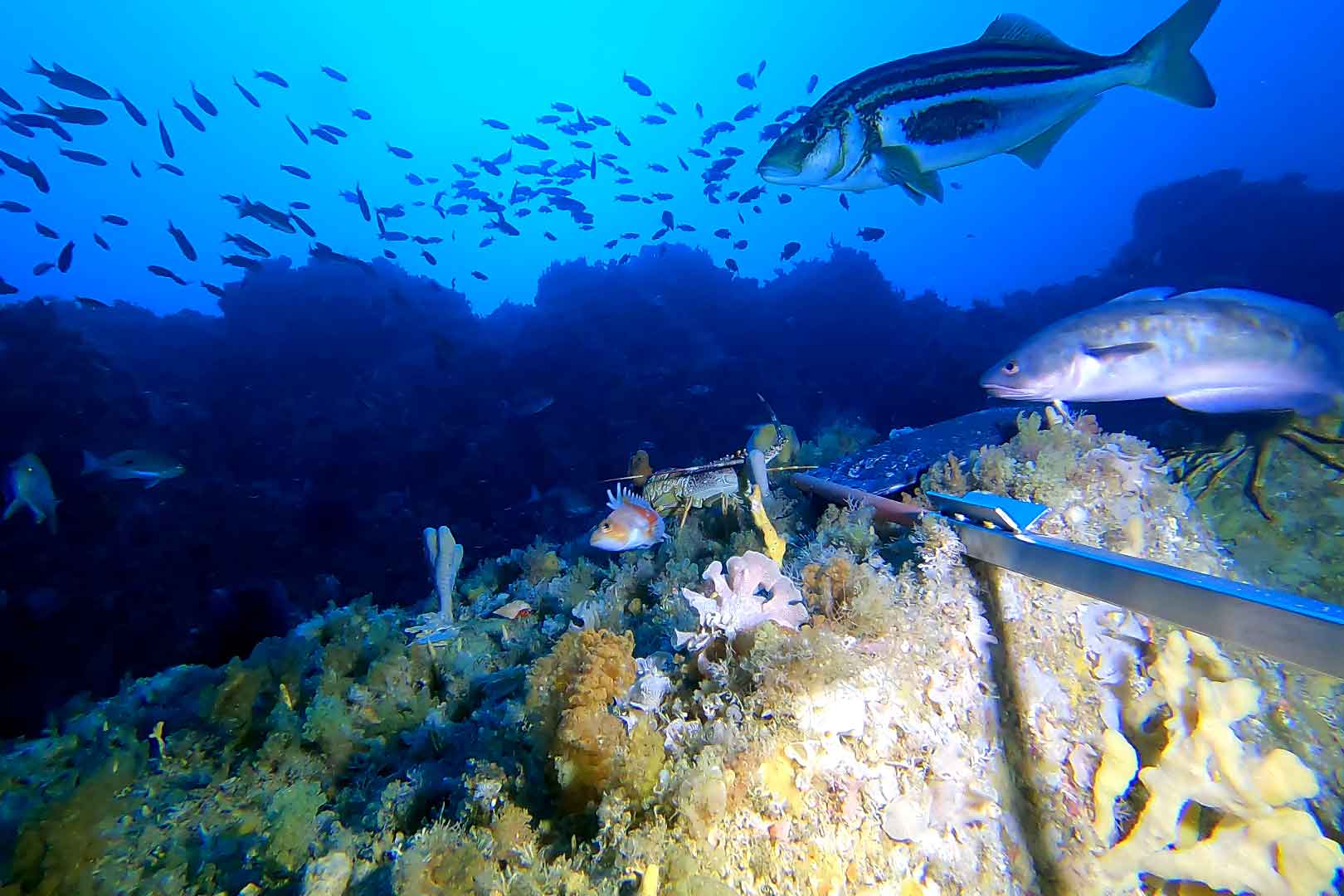
Conserved and protected areas are key management strategies to ensure the long-term health of marine ecosystems.
In the Centre for Ecology and Biodiversity, our research focuses on supporting the management of marine protected areas in Australia with geospatial mapping, ecosystem assessments, and ongoing monitoring.
We use advanced imaging techniques including mapping with multibeam echosounder, and benthic imagery collected with autonomous underwater vehicles (AUVs), baited remote underwater videos (BRUVs), and remotely operated vehicles (ROVs) to uncover patterns of diversity and associations with habitat.
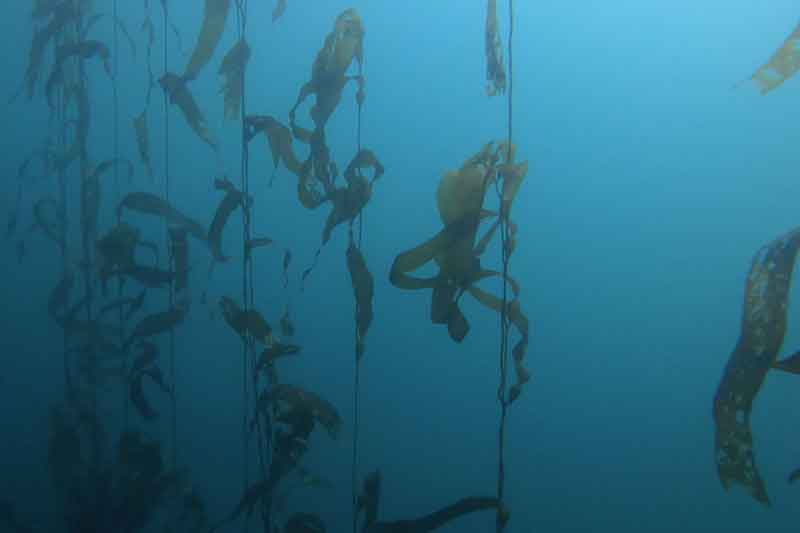
Giant kelp (Macrocystis pyrifera) aquaculture trial
Sustainable development considers social, economic, and ecological factors when making decisions about activities and the use of marine environments and resources.
In the Centre for Ecology and Biodiversity, our research contributes to the advancement of a sustainable 'Blue Economy' through ecological studies, marine spatial planning, data products, and decision-support tools for marine industries.
We strive to enhance our understanding of how marine resources can be used sustainably, such as in seaweed cultivation, while also addressing and mitigating the impacts of industries on marine ecosystems.
Our research is local, national and global. Globally, our research supports sustainable development by mapping and modelling the environmental impacts of interconnected food systems (aquaculture, fisheries, and agriculture), and the risks to aquatic foods associated with climate change.